GarageFinder
A product I'm building to make dealing with automotive service providers simpler and more transparent.
- Role
- Product builder
- Type
- Product / PWA
- Status
- In development — preparing for beta
- Location
- Bahrain
Customer journey
- Discover
- Quote
- Appointment
- Service
- Invoice
- Payment
- Review
Overview
GarageFinder is an automotive service platform I'm building to make dealing with service providers simpler and more transparent — from discovering a garage to completing work with a clearer trail of quotes, appointments, invoices, and reviews.
The problem
Getting a car serviced is often opaque. Customers struggle to compare providers, understand quotes, track appointments, and keep a reliable history of what was done. Garages need operational tools that match how work actually moves through the shop — not generic forms.
Product idea
Make automotive service simpler and more transparent.
I own the product end to end: problem definition, workflows, product decisions, engineering, and preparation for beta. The goal is a usable system for customers, garages, and administration — not a demo UI.
User types
- Discover garage
- Request quote
- Book appointment
- Track service
- Receive invoice
- Pay
- Leave review
- Manage appointments
- Issue quotes
- Run active service
- Create invoices
- Interact with customers
- Garage approval
- Documents
- Users
- Vehicles
- Appointments oversight
Core workflows
- Discover
- Quote
- Appointment
- Service
- Invoice
- Payment
- Review
- Notifications
- Service history
- Document handling
- Vehicle records
Product design
- Transparency around quotes and service status
- Workflows that mirror real garage operations
- Clear separation between customer, garage, and admin responsibilities
- PWA-oriented delivery for practical mobile use
Technical architecture
- Web / PWA application architecture
- Role-based product surfaces for customer, garage, and admin
- Business logic around appointments, quotes, invoices, and reviews
- Notification and service-history flows as part of the product system
Business model
- Two-sided platform between customers and automotive service providers
- Admin layer for onboarding and operational oversight
- Product value centered on simpler, more transparent service dealings
Current status
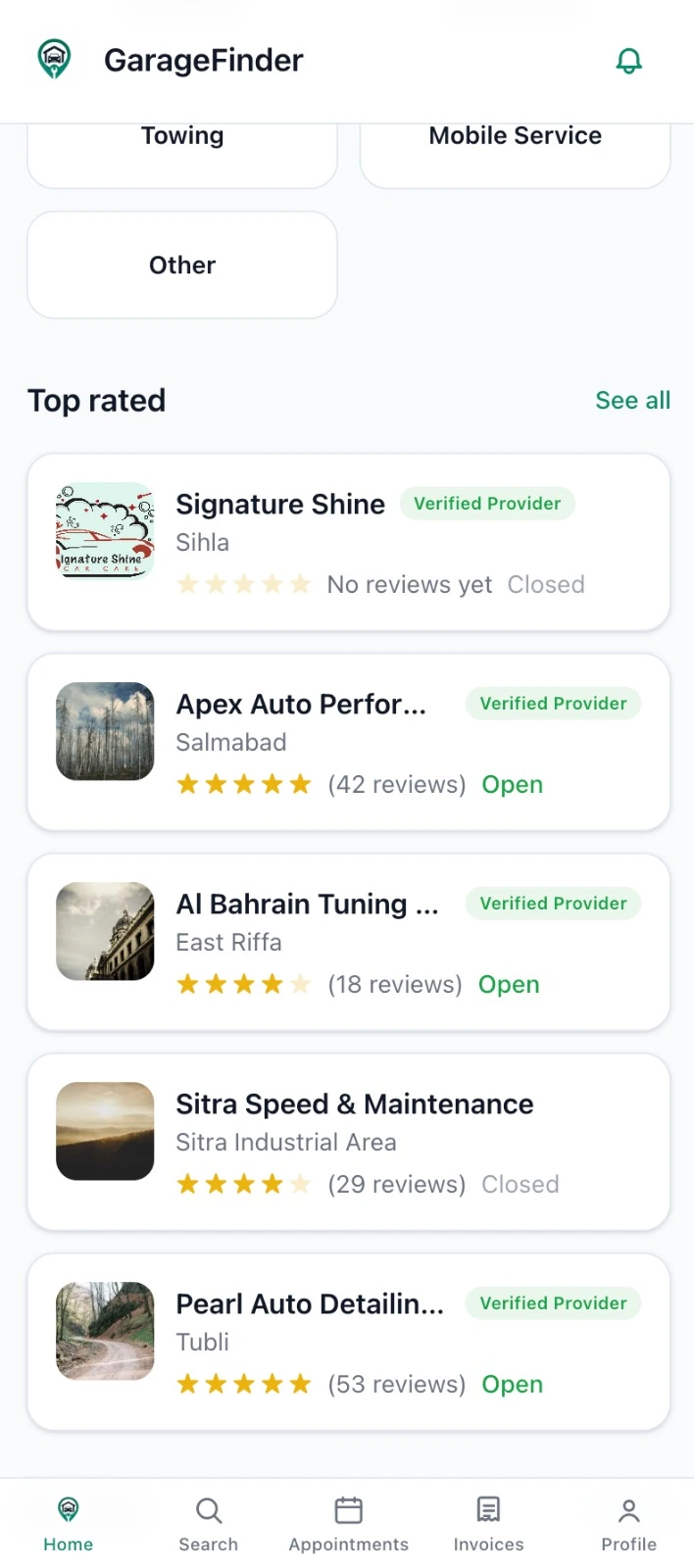
Currently being developed and prepared for beta. Visual documentation of production UI will be added as the product stabilizes.
Next steps
- 01
Complete beta-ready customer and garage workflows
- 02
Validate operational loops with real service scenarios
- 03
Document the product visually once screens are stable
Outcome
A product-shaped automotive service platform spanning customer, garage, and admin workflows — designed as an owned system rather than a collection of disconnected screens.
Lessons
- 01
Product work starts with users and workflows, not feature lists.
- 02
A two-sided service product needs coherent operations on both sides or neither side trusts it.
- 03
Building for beta means designing for incomplete reality: constraints, edge cases, and handoffs.